Ebook Download The Girl at the Baggage Claim
Are you thinking about mainly publications The Girl At The Baggage Claim If you are still confused on which one of guide The Girl At The Baggage Claim that need to be purchased, it is your time to not this site to try to find. Today, you will need this The Girl At The Baggage Claim as the most referred book and also the majority of needed book as sources, in various other time, you can take pleasure in for a few other books. It will depend upon your ready demands. But, we always suggest that publications The Girl At The Baggage Claim can be a great problem for your life.
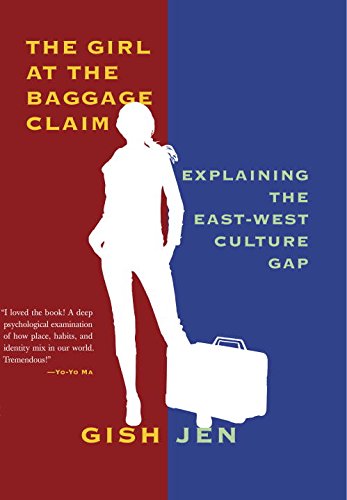
The Girl at the Baggage Claim

Ebook Download The Girl at the Baggage Claim
This is it the book The Girl At The Baggage Claim to be best seller recently. We provide you the best offer by obtaining the incredible book The Girl At The Baggage Claim in this site. This The Girl At The Baggage Claim will not just be the sort of book that is difficult to locate. In this internet site, all sorts of publications are given. You could search title by title, author by writer, as well as author by author to find out the best book The Girl At The Baggage Claim that you can check out now.
But below, we will certainly show you unbelievable thing to be able always review the publication The Girl At The Baggage Claim wherever and whenever you occur as well as time. Guide The Girl At The Baggage Claim by just could help you to understand having the publication to read whenever. It won't obligate you to consistently bring the thick book anywhere you go. You can merely keep them on the device or on soft file in your computer to constantly review the room during that time.
Yeah, hanging out to read the book The Girl At The Baggage Claim by on the internet can also give you positive session. It will relieve to interact in whatever condition. This method can be more appealing to do as well as less complicated to read. Now, to obtain this The Girl At The Baggage Claim, you can download in the link that we give. It will certainly help you to obtain simple means to download guide The Girl At The Baggage Claim.
Guides The Girl At The Baggage Claim, from easy to difficult one will be a quite valuable operates that you can take to alter your life. It will not provide you negative statement unless you don't obtain the meaning. This is surely to do in checking out a publication to conquer the significance. Typically, this e-book entitled The Girl At The Baggage Claim is checked out considering that you really like this type of publication. So, you could get less complicated to comprehend the impression and also significance. Once again to constantly bear in mind is by reviewing this publication The Girl At The Baggage Claim, you could satisfy hat your interest beginning by completing this reading e-book.
- Sales Rank: #545361 in Books
- Original language: English
- Dimensions: 9.30" h x .90" w x 6.10" l,
- Binding: Paperback
Most helpful customer reviews
15 of 16 people found the following review helpful.
Insightful and thought-provoking novelistic perspective
By Dr. Cathy Goodwin
The title of the book comes from a story of an Asian girl who applies to attend a highly-regarded prep school in the US. When the school reps go to meet her at the airport, she's nothing like they expected. It turns out the girl's sister actually took the English tests and completed the application.
If you've taught in certain universities, stories like this won't surprise you. Not everyone thinks it's wrong to help someone achieve a goal by taking their test or even writing their dissertation. When I taught in a school that got a sudden influx of Middle Easterners, one of my colleagues sighed, "For them, the grade is just a first step in the negotiating process."
Jen goes on to give a slew of examples of cross-cultural misunderstanding. She compares the Western "avocado pit" self to the Eastern "flexi-self," attuned to others, focusing on context and comfortable in groups. The distinction isn't new but Jen offers some references to current psychological research, as well as some background based on her own experience as a Chinese woman raised in the United States.
For instance, she explains that the questions on the Chinese university exams aren't based on simple reasoning; to know the answers you must be
part of an in-group so you pick up nuances of meaning. She gives examples of questions but not answers. I wish I'd known that Chinese examiners give credit for long, complicated words and phrases; I've had to advise many students that simple writing is more effective.
Jen is a novelist rather than a social scientist so her perspective is based on stories of individuals, which means the book is more descriptive than analytical. For instance, she tells stories of children who refused to follow their parents' directives for higher education and shares one story of a woman whose parents refused to let her study at a prestigious ballet company; they wanted a focus on academics. At 40, the woman remains bitter, although she realizes many of her cohort were injured and she may be better off. Still, she wanted to take her shots.
The book is extremely well-written, as one would expect from a novelist, and China is on everyone's mind these days.
But in today's world, I question whether we can draw such sharp distinctions between East and West in practice. For instance, the custom of hiring someone to write papers has become deeply entrenched in American collegiate culture. Craigslist is filled with ads inviting professors and writers to earn extra money by "helping" students. If you google, "Get a dissertation written," dozens - perhaps hundreds - of companies pop up. I can't help wondering if anybody writes their own papers anymore.
For awhile I worked occasional assignments as an academic editor. That's legit; in fact, it's not uncommon for schools to tell students to go hire an editor if they can't write. I refused to analyze data or develop new insights; I acted more like an extra dissertation advisor as well as editor. One student from England practically begged me to do a literature review, offering thousands of dollars. I refused but I'm sure he got somebody.
At one point (I have an ACR so I can't quote page numbers), Jen notes that people complain about the university exams but nobody speaks up; it wouldn't do any good, they say. She seems to suggest that accepting wide injustice is Eastern, yet we have a great deal of unfairness in every aspect of our lives in the US. Access to high-quality schools can be extremely unfair; in fact, one issue being debated now is whether an increase in charter schools will lock out poorer children and minorities who have no transportation to the top schools, even if they get in.
The educational system, health care system and justice system both have their share of horror stories. Yet over and over we hear people say exactly what Jen says the Chinese do: "What can we do?"
The examples of pattern recognition are fascinating, especially studies comparing the way Easterners and Westerners break up a block of writing into paragraphs.
However, Westerners too will attribute causality to environmental factors rather than to individuals, especially if they've been educated and exposed to certain research in social psychology. Awhile back I read a law journal article that identified predictors of juveniles who would be arrested in their teens - factors like absent fathers, as well as income and location. It's known that a certain area in the Bronx sends a disproportionate number of men to prison in New York.
Philip Zimbardo, retired professor from Stanford, has done considerable research in this area; although his work has become more controversial, he emphasized how the environment affects behavior. I believe he testified for the defense in the Abu Ghraib trials, arguing that the young soldiers were influenced strongly by the environment. You'll find many people who support these beliefs, but they're not part of our judicial system and many people are taught to accept blame and credit on a personal level for everything.
Jen makes a good point when she talks about sports teams and military units, where cohesion depends on enhancing group identity. She notes the success of the San Antonio Spurs, the men's basketball team, which has players from many countries. She could have added that they also have a female assistant coach, Becky Hammon, the first female to hold this position in men's basketball; she must be doing well as she's now in her third or fourth year with the team.
Perhaps the most challenging part of the book is Jen's brief discussion of religion, which could have been omitted. She suggests that Catholics have less individualized beliefs; that may have been true at one time but now you'll see a great deal of diversity, from liberal churches that fully accept gay and divorced members to ultra-conservatives that retain pre-Vatican II values and practices. As for mega-churches, they might be customized to make it easy to attend, but they're very big on creating communities. There's a Harvard Business School case, Willow Creek Church, that goes into this in detail (although it may be outdated now). And Asians seem to accept Protestant denominations in large numbers.
The bottom line is that it's worthwhile to investigate differences in what the book's subtitle calls the east-west cultural gap, but to be aware that it's increasingly hard to generalize. It's definitely helpful to understand the perspective of the "other" and realize that their behaviors make perfect sense within the culture. Jen's contribution is to put a human face - or rather several faces - on these differences.
In the end, Jen tells us the story of the girl at the baggage claim, but she doesn't know the full story. She also doesn't know what happened to the man who stopped the tanks at during the Tiananmen Square protests. I found myself wondering...are open endings a characteristic of Eastern thought or of a novelist? Or did her best examples just turn out that way?
6 of 7 people found the following review helpful.
Thumbs up from an American mom who adopted her daughter from China
By Melissa Ludtke
I like that in The Girl at the Baggage Claim novelist Gish Jen keeps us walking down the path she carved out for us in her only other nonfiction book, "Tiger Writing." As the creator of Chinese characters that populate her novels and the American-born daughter of Chinese immigrants, Jen is well positioned to lead us on an adventurous exploration of the roots and consequences of East-West cultural difference as seen through the lens of the “self.” She telegraphs her ambitious mission in the book’s subhead, “Explaining the East-West Culture Gap,” and she succeeds in her attempt to explain what likely can never be fully explained. While the identity of the girl in her book’s title remains a mystery, Jen describes her as a Chinese student who is enrolled at an American school but shouldn't be. This girl's real-life circumstance inspires Jen to unravel ribbons of enticing clues as she sets out to solve a different mystery: Why in our time of globalization, immigration and student exchanges do centuries-old East-West cultural dividing lines of “self” retain such a stubborn hold on us? At the get-go Jen acknowledges that “whether or not there is an ‘East’ or a ‘West’ exactly, there is still an East-West culture gap.” Were I not a believer in the influence that culture exerts on our sense of self before reading this book, then Jen’s persuasive arguments, told through contrasting perspectives and experiences and documented with the findings of scholars, I’d be convinced upon finishing its Epilogue, “Greatness in Two Flavors.” Throughout the book, she sprinkles humorous images among her words, referring to Westerners as the “big pit self” (think avocado) and Easterners as “flexi-self” (imagine bodies bending to fit their context). Jen presents her inquiry of how and why we act as we do in such ways that we begin to see ourselves as others see us. As an American mom of a daughter I adopted from China, I’m grateful to Jen for sharing her cultural discoveries. Her insights and examples opened up fresh ways for me to better appreciate the different cultural touchstones that guide the lives of Asians and Americans.
1 of 1 people found the following review helpful.
An Engaging Look Across Cultures
By Jeff Baron
Think of your favorite college professor: knowledgeable about his or her field, of course, thoughtful about the research, able to synthesize the work of others into a syllabus — and thoroughly engaging for the uninformed undergraduate (that's me, or you) who has signed up for the course and is willing to get excited about the material.
Gish Jen is a novelist, and a good one, not a PhD in cultural psychology or sociology. But her life, like her novels, has clearly been in part about the large and small fascinating and diverging ways in which East and West, particularly China and the United States, look at so many aspects of how we fit into our world. And she makes "The Girl at the Baggage Claim" a thoroughly fun, thought-provoking and scholarly romp through this compelling subject.
Yes, scholarly: Jen isn't a researcher, but she relies in part on studies by a number of them. (She's clearly immersed herself in the subject.) And thought-provoking: You will find yourself reconsidering your assumptions about art, about education, about entrepreneurship, about citizenship and government. And let's face it, reconsidering assumptions is at the heart of what education is about, whether we are children or college students or old enough to have grandchildren in college.
And Jen makes the journey fun, both through her obvious talent as a writer and her delight in uncovering the fascinating nuggets that she's uncovered along the way.
The Girl at the Baggage Claim PDF
The Girl at the Baggage Claim EPub
The Girl at the Baggage Claim Doc
The Girl at the Baggage Claim iBooks
The Girl at the Baggage Claim rtf
The Girl at the Baggage Claim Mobipocket
The Girl at the Baggage Claim Kindle

Tidak ada komentar:
Posting Komentar